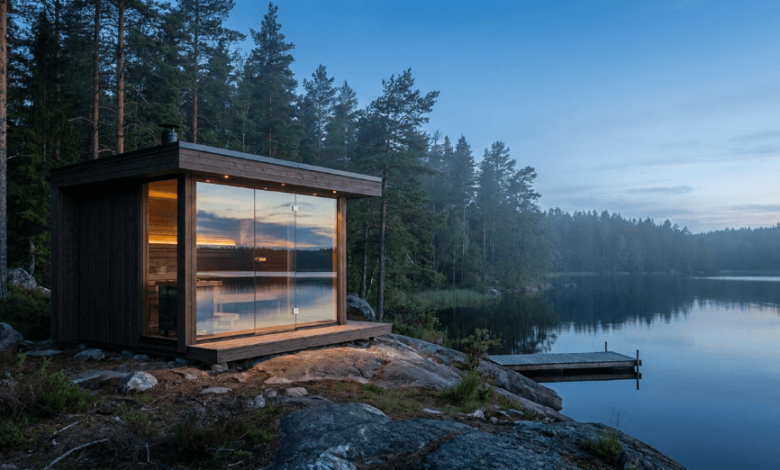
The five most common mistakes when buying an outdoor sauna are sizing the heater to square footage instead of cubic volume, choosing wood based on price alone, skipping the electrical assessment until after ordering, ignoring how the unit will be moved and placed on site, and comparing sticker prices without accounting for freight, a pad, and wiring. Each one is avoidable with about twenty minutes of planning before checkout, and each one is expensive to fix after a cabin is already sitting in the yard.
Mistake One: Sizing the Heater by Floor Space, Not Volume
Heater output is sold in kilowatts, and the right number depends on cubic footage, not the square footage printed on a listing. A cabin with a peaked roof, a large glass door, or exposed corners loses heat faster than a low, tight box with the same floor plan, and needs a proportionally larger heater to compensate. Buyers who compare two units purely by footprint often end up with a heater that runs nonstop and still falls short of a comfortable 170 to 180 degrees. Before ordering, multiply length by width by average interior height to get cubic footage, then check that figure against the manufacturer’s sizing chart rather than trusting a generic “fits two people” label.
Mistake Two: Choosing Wood by Price Instead of Performance
Western red cedar and Nordic or thermally modified spruce dominate the market because they resist warping through repeated heat and moisture cycles and release little resin once hot. Cheaper listings sometimes substitute untreated pine or vague “premium wood” language without naming the species, which is a warning sign rather than a selling point. A legitimate builder states both the species and the drying process, since improperly dried lumber cracks and warps within a season or two outdoors. Paying slightly more for correctly kiln-dried cedar or heat-treated spruce, and confirming tongue-and-groove joinery with no exposed interior fasteners, avoids a cabin that looks fine in photos but degrades fast once it is actually outside.


Mistake Three: Ordering Before Checking the Electrical Panel
Most residential sauna heaters above about 6 kilowatts need a dedicated 240-volt circuit, and a surprising number of buyers discover this only after the cabin has already arrived. Panels that are already near capacity may need an upgrade before an electrician can even run the new circuit, which adds cost and time that nobody planned for. Getting a quote from a licensed electrician before ordering, not after, turns a potential multi-week delay into a known line item that can be budgeted properly. Outdoor installations also typically need a disconnect switch within sight of the heater under most local codes, which is worth confirming with an electrician rather than assuming.
Mistake Four: Underestimating Site Placement and Access
A barrel or cabin sauna is heavy, often 600 to 1,200 pounds assembled, and getting it from a delivery truck to its final spot is not always as simple as rolling it across the lawn. Gates, fences, and sloped yards can turn a straightforward delivery into a logistical problem that costs extra for a crane or a longer carry. Buyers should measure gate widths and the full path from the street to the intended site before ordering, and confirm with the retailer whether delivery includes placement or just curbside drop-off. Skipping this step is a common reason a sauna sits half-assembled in a driveway for weeks longer than planned.
Mistake Five: Comparing Sticker Prices Without the Full Cost
A listed price for the cabin alone rarely reflects what a working sauna actually costs once electrical work, a pad or foundation, freight, and assembly labor are added, and that gap commonly runs 20 to 40 percent above the sticker number. Retailers that specialize in outdoor saunas generally itemize these costs rather than folding them into one number, and taking a few minutes to SweatDecks.com alongside two or three other specialty sellers is a reasonable way to see how a given model’s all-in cost compares before committing. Buyers who shop on unit price alone are the ones most likely to be surprised by a final invoice several thousand dollars above what they expected.
What the Research Says About Regular Sauna Use
Once the sauna is installed correctly, the reason most people buy one in the first place holds up reasonably well in the research. A 2018 review in Mayo Clinic Proceedings summarized cardiovascular associations across multiple studies of regular sauna bathing, and a 2023 follow-up review in the same journal examined whether combining sauna use with other lifestyle habits added further benefit. A systematic review in Evidence-Based Complementary and Alternative Medicine reported similar associations for regular dry sauna use. These are population-level findings, mostly from Finnish cohorts, showing association rather than proof that any one person’s sauna use will produce a specific health outcome, and none of it changes the basic buying mistakes above, which cost money regardless of what the research eventually shows about frequency.
Frequently Asked Questions
What is the single most common mistake when buying an outdoor sauna? Undersizing the heater relative to cubic footage rather than floor area. A tall ceiling or large glass door needs more heater capacity than the square footage alone suggests.
Does a cheap outdoor sauna save money in the long run? Usually not. Thin panels, unrated heaters, and vague wood descriptions tend to fail within a few years, costing more than a properly specified unit bought the first time.
Can any outdoor sauna heater plug into a regular outlet? No. Most heaters above roughly 6 kilowatts need a dedicated 240-volt circuit from a licensed electrician, not a standard household outlet.
How much should someone budget beyond the sticker price? Plan for 20 to 40 percent above the listed unit price to cover electrical work, a pad or foundation, delivery, and assembly.
References
- Does the Combination of Finnish Sauna Bathing and Other Lifestyle Factors Confer Additional Health Benefits? A Review of the Evidence, Mayo Clinic Proceedings, 2023
- Effects of heat and cold on health, with special reference to Finnish sauna bathing, American Journal of Physiology, 2018
- Cardiovascular and Other Health Benefits of Sauna Bathing: A Review of the Evidence, Mayo Clinic Proceedings, 2018
- By Nathan Pruitt